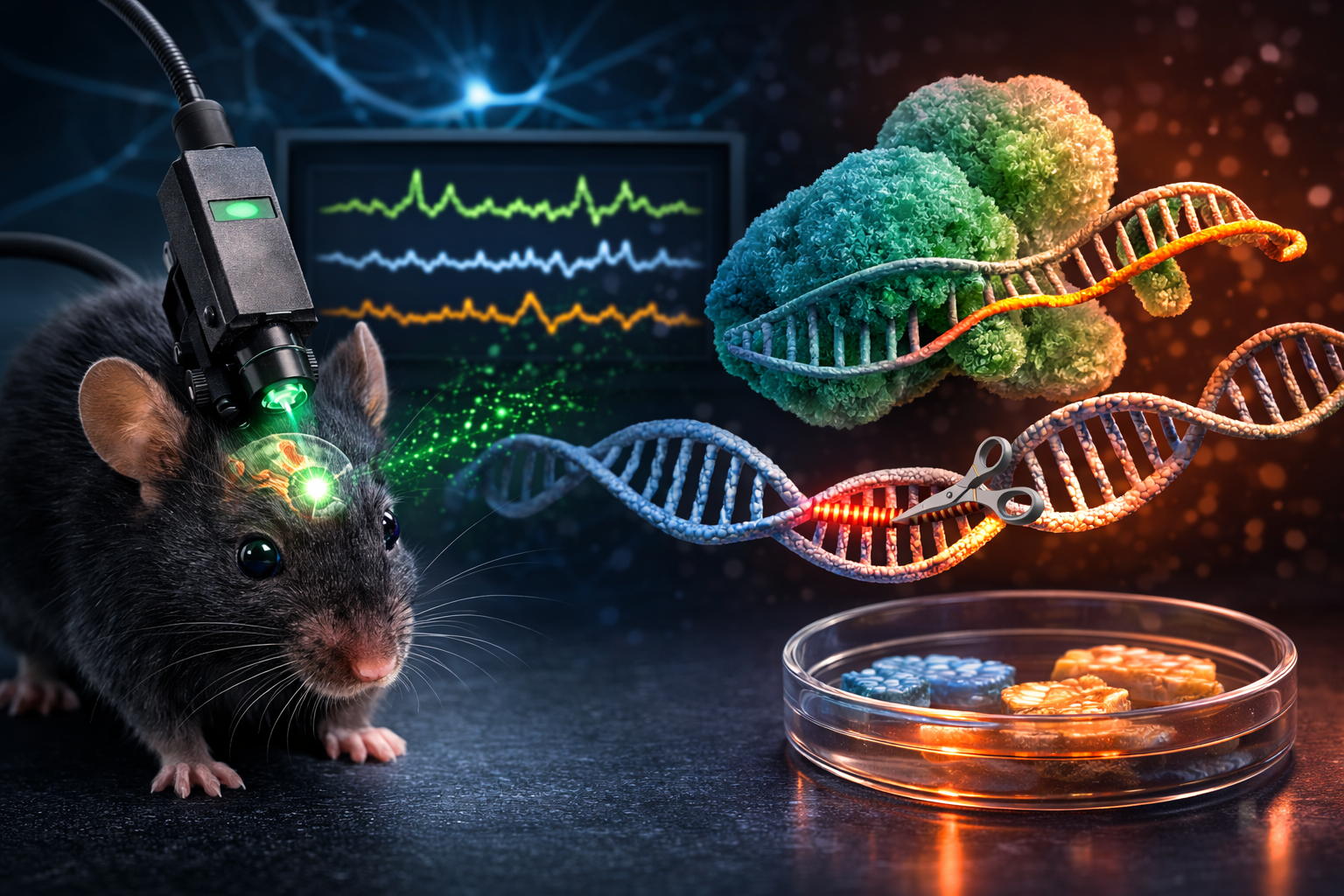
The brain continuously integrates internal and external information to generate appropriate physiological and behavioral responses. Affective states play a central, evolutionarily conserved role in prioritizing and shaping these responses. Yet fundamental questions remain unresolved: (1) How do affective states emerge, and how are they regulated? (2) Why do some states persist while others rapidly decay? (3) How are these states actively terminated? (4) How are they dynamically adapted to align with internal needs and environmental demands? Addressing these questions is essential for understanding how dysregulation of affective states contributes to the emergence of neurological and neuropsychiatric disorders
Our Research
How Affective States Are Regulated
Molecular- and Circuit-Based Mechanisms
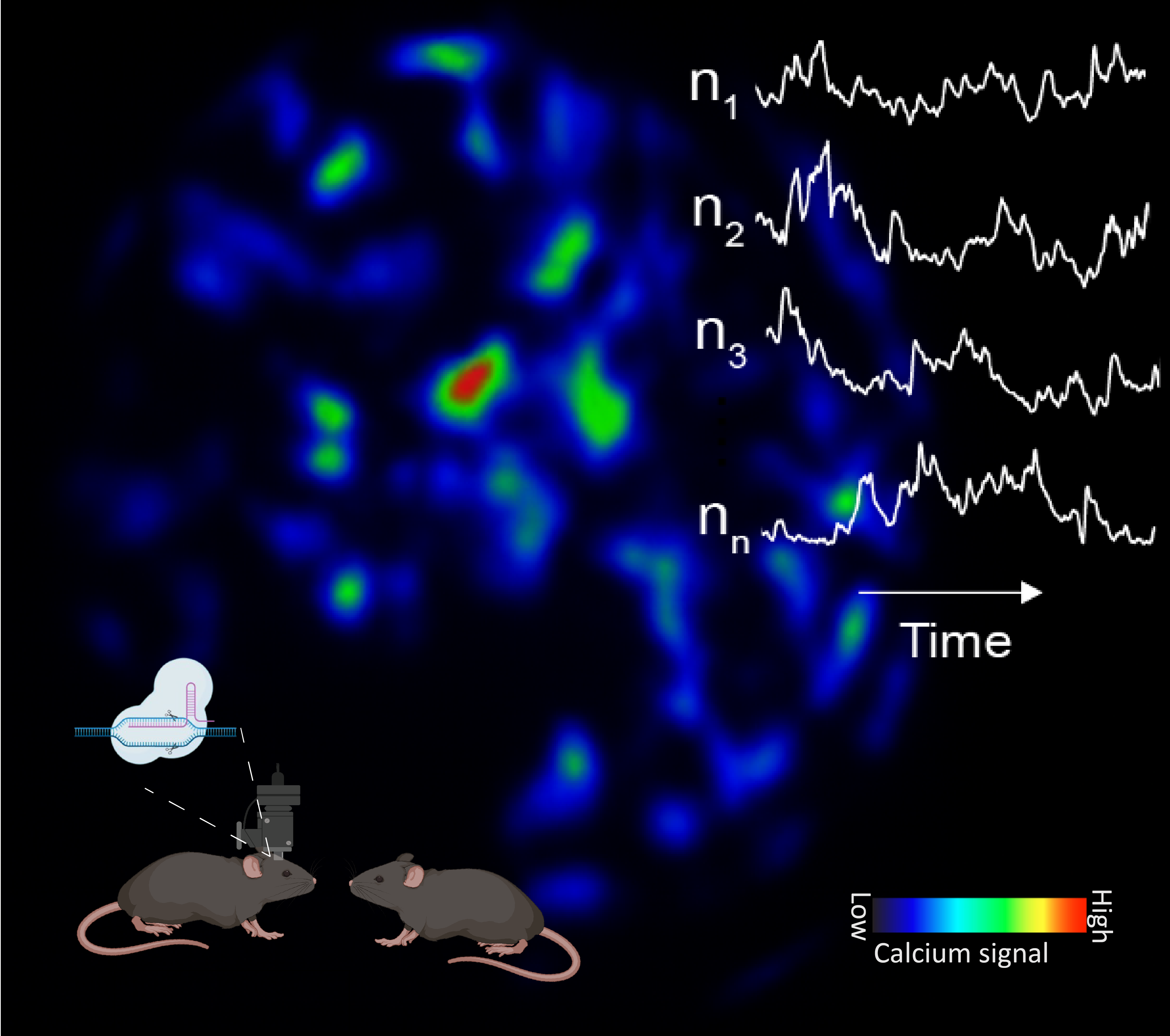
Our Approach
New Tools to Study Internal States
A longstanding goal of our lab is to develop and apply novel approaches that integrate large-scale perturbation-based functional genomics, genetics, optical single-cell recordings in freely behaving animals, quantitative behavioral monitoring, and computational modeling to study the neural mechanisms underlying mammalian internal states.